Hypermobility can feel like a double-edged sword. While having exceptional flexibility might seem advantageous, it often comes with joint instability, chronic pain, and increased injury risk that demands specialized training approaches.

For athletes with hypermobile joints, traditional exercise programs can actually worsen symptoms rather than improve performance. Understanding how to safely strengthen and stabilize your body while respecting your unique joint mobility is essential for long-term athletic success and injury prevention.
🔍 Understanding Hypermobility in Athletic Performance
Hypermobility occurs when joints move beyond the normal range of motion, a condition affecting approximately 10-20% of the population. For athletes, this extra flexibility can create both opportunities and significant challenges that require intelligent programming.
The primary issue isn’t the flexibility itself—it’s the lack of neuromuscular control at end ranges of motion. When joints extend beyond typical limits without adequate muscular support, the surrounding soft tissues bear excessive stress, leading to microtrauma, inflammation, and eventual chronic conditions.
Many hypermobile athletes experience subluxations (partial dislocations), chronic tendinopathy, and proprioceptive deficits. These individuals often describe feeling “loose,” “unstable,” or like their joints might “give out” during activities. This sensation stems from reduced joint position awareness and inadequate muscular activation patterns.
The Athletic Paradox of Extra Flexibility
Sports like gymnastics, dance, swimming, and martial arts often attract hypermobile individuals because their natural flexibility provides competitive advantages. However, this same characteristic becomes problematic when training intensity increases without proper stabilization work.
Research demonstrates that hypermobile athletes show delayed muscle activation responses compared to their non-hypermobile counterparts. This delay means muscles don’t engage quickly enough to protect joints during dynamic movements, increasing injury vulnerability during high-speed or high-impact activities.
💪 Core Principles of Safe Training for Hypermobile Bodies
Effective training for hypermobile athletes requires a fundamental shift from traditional “stretch to increase flexibility” paradigms toward “strengthen in available ranges” approaches. The goal isn’t limiting movement but building control throughout every degree of motion.
Progressive Stabilization Over Maximum Range
Instead of pushing into end-range positions, hypermobile athletes benefit from working in mid-ranges first. This approach builds foundational strength where joints are most stable before gradually expanding the working range with adequate muscular control.
Think of it as creating a muscular “container” for your joints. Rather than allowing joints to reach their absolute limits, you develop strength that stops movement slightly before the anatomical endpoint, protecting ligaments and joint capsules from repeated overstretching.
Isometric Holds: Your Foundation Exercise
Isometric exercises—holding positions without movement—provide exceptional benefits for hypermobile athletes. These exercises improve neuromuscular control, enhance proprioception, and build endurance in stabilizing muscles without the risks associated with dynamic movements.
Starting with 10-15 second holds and gradually progressing to 30-45 seconds allows nervous system adaptation. The key is maintaining perfect form throughout the hold, avoiding any joint “hanging” or sinking into passive structures.
🎯 Essential Range-of-Motion Drills for Hypermobile Athletes
The following drills specifically address common problem areas for hypermobile individuals while building functional strength and stability. Each exercise emphasizes controlled movement quality over quantity or intensity.
Controlled Articular Rotations (CARs)
CARs represent one of the most valuable tools for hypermobile athletes. These slow, deliberate joint rotations through available ranges improve body awareness while identifying areas of weakness or instability.
To perform shoulder CARs: Stand with good posture, engage your core, and slowly move your arm in the largest pain-free circle possible, taking 15-20 seconds per rotation. Focus on smooth, continuous movement without compensation from other body parts. Complete 3-5 rotations in each direction, pausing at any “sticky spots” for 5-10 seconds.
Apply this same principle to hips, ankles, wrists, and spine. The slower you move, the more control you build. Resist the temptation to use momentum or push into maximum range—controlled mid-range movement provides superior benefits.
Banded Joint Distraction Exercises
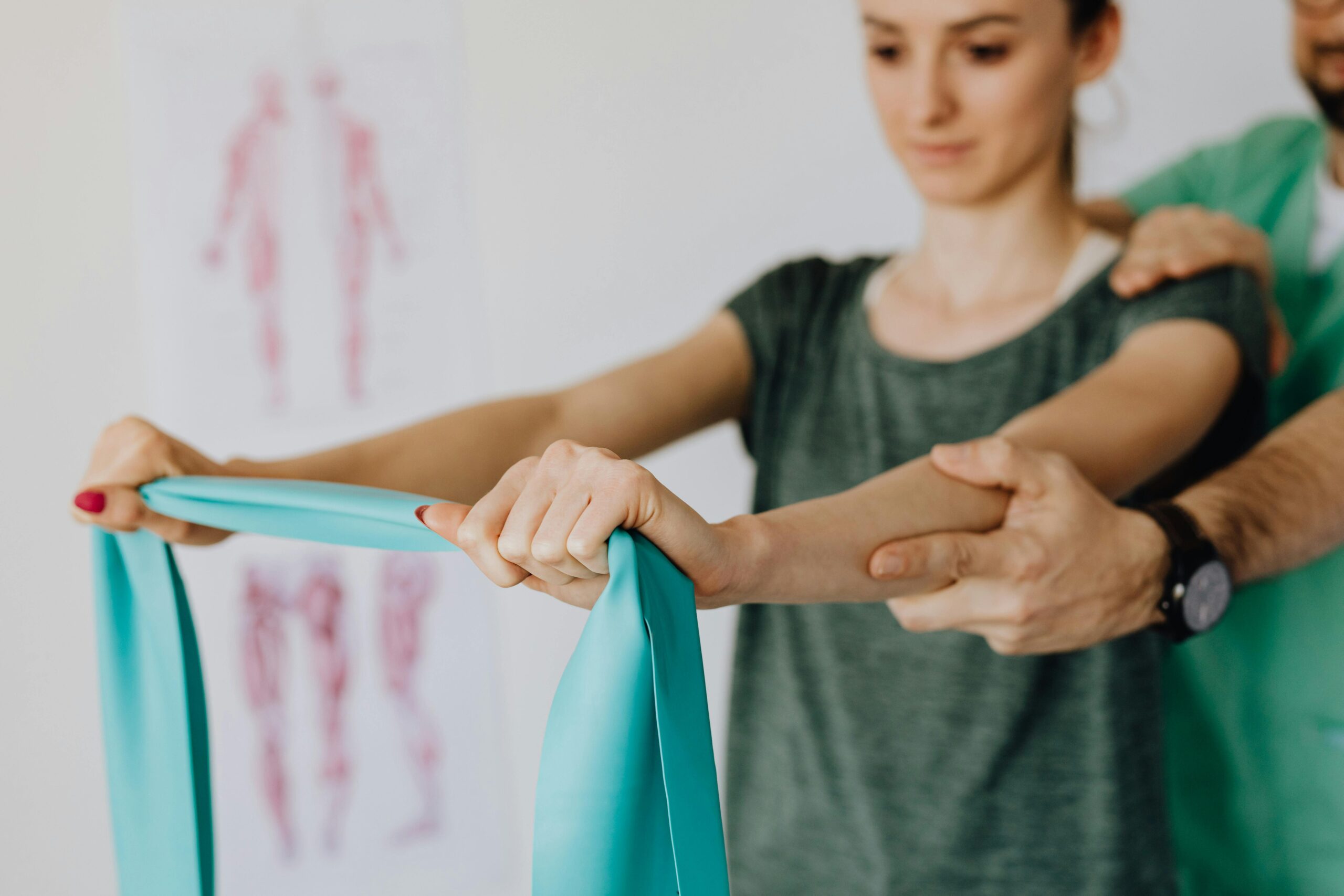
Using resistance bands to create gentle joint traction while performing movements can significantly improve proprioception and muscle activation patterns. This technique provides external feedback that helps your nervous system better understand joint position.
For knee stability: Attach a resistance band around your thigh just above the knee. Step away to create moderate tension, then perform slow squats or lunges, focusing on preventing the knee from collapsing inward. The band’s resistance challenges your hip stabilizers to maintain proper alignment.
Eccentric Strengthening Protocols
Eccentric exercises—emphasizing the lowering or lengthening phase of movements—build exceptional strength in hypermobile athletes. These exercises create more muscle damage (in a productive way) and force adaptation that improves joint control.
Try eccentric calf raises: Stand on a step with both feet, rise onto your toes, then slowly lower on one leg over 5-8 seconds. The extended lowering phase builds strength in the lengthened position where hypermobile individuals typically lack control. Perform 3 sets of 8-10 repetitions per leg.
🧘♀️ Proprioception Training: The Missing Link
Proprioception—your body’s awareness of position in space—is often impaired in hypermobile individuals. Enhancing this sense dramatically reduces injury risk and improves movement quality across all athletic activities.
Balance Challenge Progressions
Balance training provides exceptional proprioceptive benefits. Start with simple single-leg stands for 30 seconds, ensuring perfect posture without allowing the hip to “hang out” to the side—a common compensation in hypermobile individuals.
Progress through these challenges: eyes closed, unstable surface, adding arm movements, catching and throwing a ball, and eventually incorporating sport-specific movements. Each progression increases the proprioceptive demand while building stability.
Slow-Motion Movement Practice
Performing sport-specific movements at drastically reduced speeds (50% or slower) forces enhanced body awareness and control. This technique allows you to identify compensation patterns and correct them before they become ingrained at full speed.
Film yourself performing these slow-motion drills. Visual feedback often reveals hypermobile positions you can’t feel, such as knee hyperextension during landing or elbow hyperextension during push-ups.
🛡️ Joint-Specific Stabilization Strategies
Different joints require tailored approaches based on their structure, function, and typical hypermobility patterns. Understanding these nuances creates more effective training programs.
Shoulder Stability Fundamentals
Hypermobile shoulders frequently subluxate or dislocate, particularly in overhead athletes. Building rotator cuff strength and scapular stability provides the foundation for safe shoulder function.
Wall slides with scapular focus: Stand with your back against a wall, arms in a “W” position. Slowly slide arms overhead while maintaining all contact points with the wall. Most hypermobile athletes lose scapular contact or arch their lower back—these compensations must be eliminated before progressing to weighted overhead exercises.
Hip and Pelvic Control
Hip hypermobility often manifests as excessive internal rotation, contributing to knee pain and lower back issues. Strengthening hip external rotators and abductors creates the stability needed for safe lower-body movement.
Side-lying clamshells with resistance: Lie on your side with knees bent and a resistance band around your thighs. Open the top knee while keeping feet together, but here’s the key—only open to about 70% of your maximum range. Hold for 2 seconds at the top, focusing on feeling the muscles work rather than achieving maximum stretch. Perform 3 sets of 15-20 repetitions.
Knee Protection Protocols
Knee hyperextension—a hallmark of lower limb hypermobility—places excessive stress on the posterior knee structures. Teaching athletes to maintain a “soft knee” position during all activities prevents cumulative damage.
Terminal knee extension exercise: Attach a resistance band at knee height. Step into it so the band pulls your knee forward. Practice straightening your knee against the resistance but stop just before full extension (about 5-10 degrees before lockout). This builds strength in the exact range where control is most needed. Perform 3 sets of 15 repetitions.
📊 Sample Weekly Training Structure
Organizing your training week to balance strength, stability, and sport-specific work optimizes results while managing recovery needs. Hypermobile athletes often require more recovery than their less flexible counterparts due to greater tissue stress.
| Day | Focus Area | Duration | Key Elements |
|---|---|---|---|
| Monday | Full-Body Stability | 45-60 min | CARs, isometric holds, eccentric exercises |
| Tuesday | Sport-Specific Drills | 30-45 min | Slow-motion practice, technical work |
| Wednesday | Proprioception & Balance | 30 min | Single-leg work, unstable surfaces, visual feedback |
| Thursday | Active Recovery | 20-30 min | Gentle movement, joint CARs, walking |
| Friday | Lower Body Focus | 45-60 min | Hip/knee/ankle stability, eccentric strengthening |
| Saturday | Upper Body Focus | 45-60 min | Shoulder/elbow stability, scapular control |
| Sunday | Rest or Light Activity | Optional | Walking, swimming, gentle yoga |
⚠️ Red Flags and When to Modify
Understanding warning signs helps hypermobile athletes avoid pushing through pain that indicates actual tissue damage rather than normal training discomfort. Learning this distinction is crucial for long-term health.
Stop exercises immediately if you experience: sharp pain, sudden “giving way” sensations, swelling that develops during or immediately after exercise, numbness or tingling, or feelings of instability that persist beyond the exercise session.
The Pain Scale Reconsidered
Traditional “no pain, no gain” mentality is particularly dangerous for hypermobile athletes. Instead, use this guideline: discomfort from muscle fatigue is acceptable, but joint pain or sensations of instability require immediate modification.
If an exercise causes joint discomfort, try these modifications: reduce range of motion, decrease resistance, slow down movement speed, or substitute an alternative exercise targeting the same muscle group. Never push through joint pain hoping it will “get better.”
🔄 Progressive Overload for Hypermobile Bodies
Traditional progressive overload—continuously adding weight or repetitions—requires modification for hypermobile athletes. Quality of movement should always supersede quantity or intensity.
Smart Progression Variables
Instead of immediately increasing weight, progress through these variables first: improve movement quality and control, extend time under tension, reduce rest periods, increase stability challenges (unstable surfaces, single-leg variations), and only then add external resistance.
This hierarchy ensures you build control before strength, creating sustainable long-term progress without injury setbacks. Many hypermobile athletes can perform impressive feats of flexibility or even strength but lack the neuromuscular control that truly protects joints.
🧠 The Mind-Body Connection in Hypermobility Training
Mental focus and intentional movement practice amplify physical training benefits. For hypermobile athletes, this connection becomes even more critical because building new movement patterns requires conscious attention before they become automatic.
Visualization Techniques
Before performing exercises, spend 30-60 seconds visualizing perfect form. Imagine your muscles engaging to support joints, preventing end-range positions, and maintaining alignment. This mental rehearsal activates similar neural pathways as physical practice.
Breathing Strategies for Stability
Proper breathing creates intra-abdominal pressure that stabilizes the trunk, providing a foundation for limb movements. Practice “360-degree breathing” where you expand your ribcage in all directions rather than just lifting the chest or pushing out the belly.
During exercises, exhale during the exertion phase while maintaining core tension. Avoid breath-holding, which increases blood pressure and reduces oxygen delivery to working muscles.
🎓 Working With Healthcare Professionals
While self-directed training provides numerous benefits, hypermobile athletes often achieve best results when working collaboratively with knowledgeable healthcare providers who understand hypermobility conditions.
Seek professionals with specific experience in hypermobility, Ehlers-Danlos Syndrome (EDS), or joint hypermobility syndrome (JHS). Physical therapists, athletic trainers, and strength coaches with this background can identify subtle compensation patterns and create individualized progressions.
Regular assessments every 8-12 weeks help track progress objectively. Document changes in strength, stability, pain levels, and functional capacity. These measurements provide valuable feedback about training effectiveness and highlight areas needing additional focus.
🌟 Building Long-Term Athletic Success
Training as a hypermobile athlete requires patience, consistency, and a fundamental mindset shift from “more is better” to “better is better.” The athletes who achieve long-term success embrace their hypermobility as a characteristic requiring management rather than a limitation preventing participation.
Focus on small, consistent improvements rather than dramatic transformations. Building neuromuscular control happens gradually through repetition and practice. Celebrate progress markers like improved proprioception, reduced pain levels, better movement quality, and enhanced confidence in your body’s capabilities.
Remember that setbacks are normal and don’t erase previous progress. If you experience a flare-up or minor injury, scale back training intensity while maintaining movement within pain-free ranges. Complete rest is rarely optimal—gentle, controlled movement promotes healing and maintains neuromuscular connections.
Creating Your Sustainable Practice
Develop a morning routine incorporating 10-15 minutes of joint CARs and activation exercises. This daily practice builds consistency while preparing your body for daily activities. Even on rest days, gentle movement maintains awareness and control.
Track your training in a journal, noting exercises performed, how joints felt during and after, energy levels, and any pain or instability experienced. Patterns emerge over time, revealing which exercises provide maximum benefit and which require modification.
Your hypermobility doesn’t define your limitations—it simply defines your training requirements. With appropriate range-of-motion drills, progressive stabilization work, and consistent proprioceptive training, hypermobile athletes can build remarkable strength, reduce injury risk, and achieve exceptional athletic performance while respecting their unique joint characteristics. The journey requires intelligence, patience, and commitment, but the destination—a strong, stable, capable body—makes every controlled repetition worthwhile.