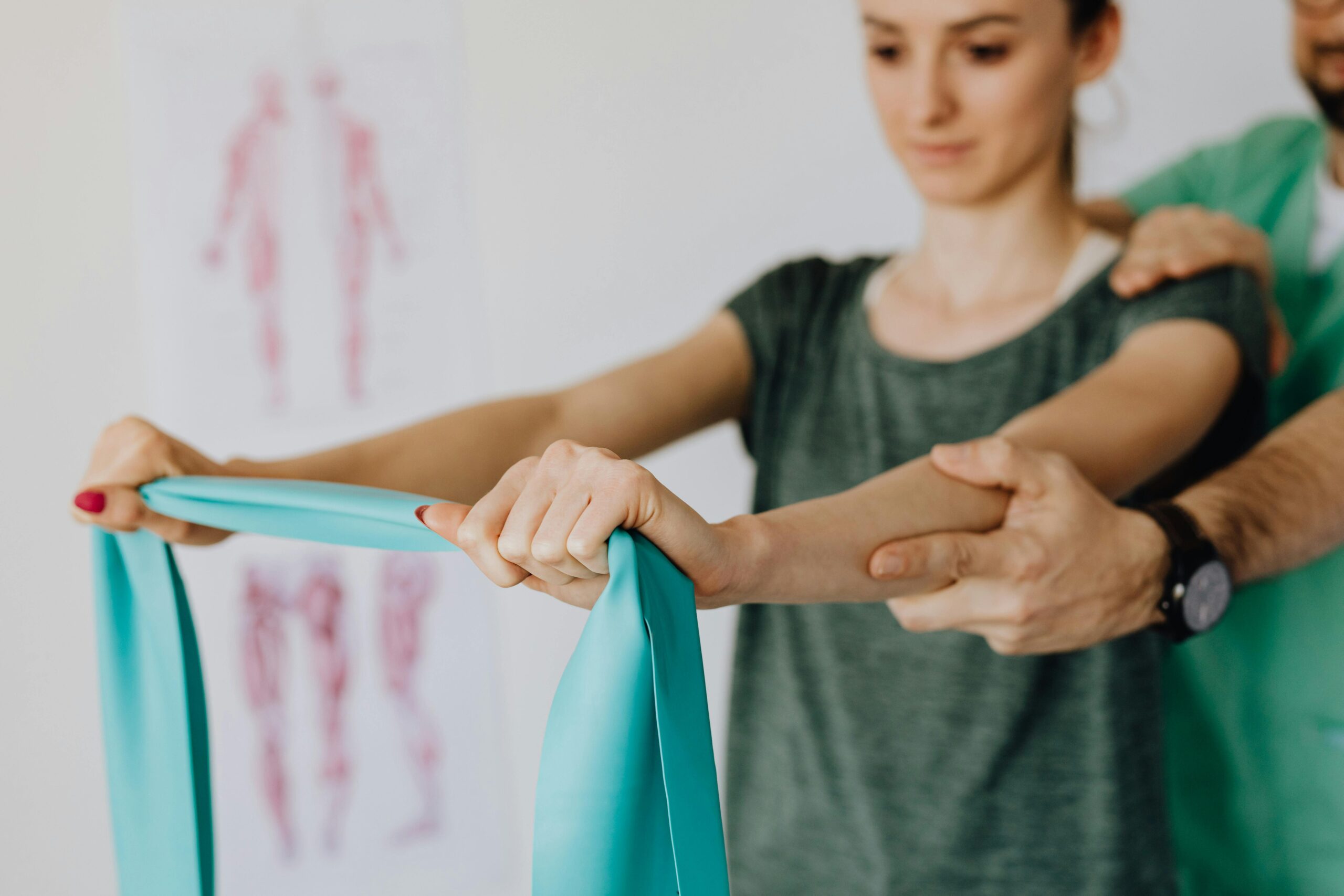
Your hips are the foundation of nearly every movement you make, from walking up stairs to reaching overhead. When hip stability falters, everything from athletic performance to daily comfort suffers, often leading to compensatory patterns that cascade throughout your body.

Understanding and developing proper hip stability isn’t just for athletes or fitness enthusiasts—it’s essential for anyone who wants to move through life with confidence, strength, and freedom from nagging discomfort. Whether you’re recovering from an injury, looking to enhance your performance, or simply wanting to make everyday activities easier, mastering hip stability progressions can transform how your body functions.
🎯 Why Hip Stability Matters More Than You Think
Hip stability refers to your body’s ability to control movement and maintain proper alignment at the hip joint during both static and dynamic activities. Unlike flexibility or mobility alone, stability involves the coordinated action of multiple muscle groups working together to create controlled, efficient movement patterns.
When your hips lack stability, your body seeks alternative strategies to complete movements. These compensations often involve the lower back, knees, or ankles taking on stress they weren’t designed to handle. Over time, this can lead to chronic pain, reduced performance, and increased injury risk.
The hip joint is a ball-and-socket structure capable of movement in multiple planes. This versatility makes it incredibly functional but also vulnerable when the supporting muscles aren’t doing their job. Deep stabilizers like the gluteus medius, gluteus minimus, and hip rotators must work in harmony with larger prime movers to maintain optimal joint positioning.
The Foundation: Understanding Your Hip Anatomy
Before diving into progressions, it’s valuable to understand what you’re working with. The hip complex includes more than just the ball-and-socket joint itself. It encompasses a network of muscles, tendons, ligaments, and fascia that all contribute to stability and movement quality.
The gluteal muscles form the primary stabilizing force for your hips. The gluteus maximus, the largest muscle in your body, powers hip extension and external rotation. The gluteus medius and minimus, located on the sides of your hips, are crucial for preventing the pelvis from dropping when standing on one leg—something you do with every step you take.
Deep hip rotators including the piriformis, obturator muscles, and gemelli provide fine-tuned control of hip rotation. The hip flexors at the front, including the iliopsoas, work in opposition to create balanced movement. When any of these components become weak, tight, or dysfunctional, the entire system suffers.
🔍 Assessing Your Current Hip Stability
Before beginning any progression, it’s helpful to understand your starting point. Several simple tests can reveal hip stability limitations without requiring special equipment or professional assessment.
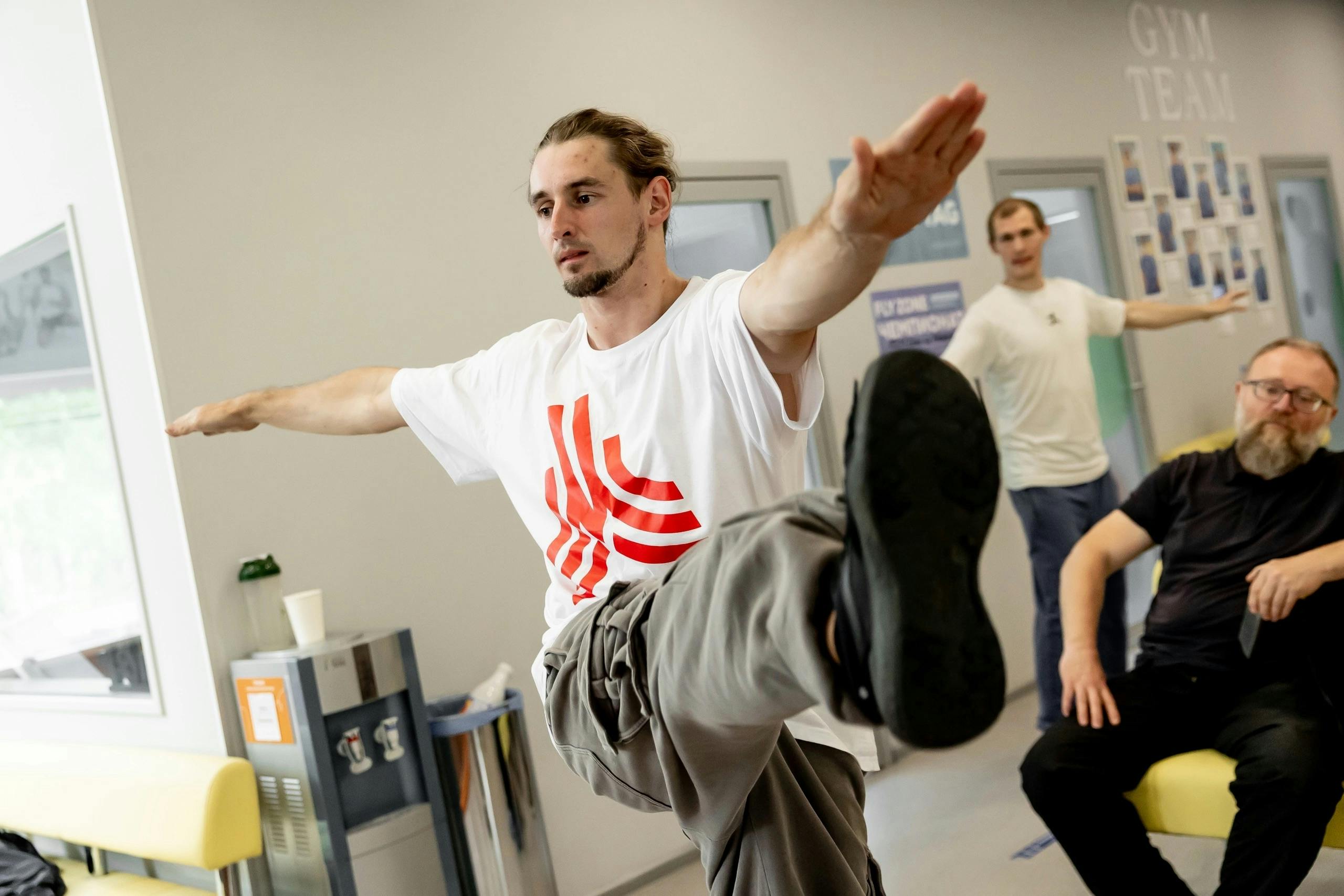
The single-leg stance test is remarkably revealing. Stand on one leg for 30 seconds with your eyes open, then repeat with eyes closed. If you struggle to maintain balance, experience wobbling at the hip or knee, or feel your arch collapsing, hip stability likely needs attention.
The lateral step-down test assesses functional hip control. Stand on a step, slowly lower the opposite leg toward the ground, and observe what happens. If your knee caves inward, your hip drops significantly, or your torso leans excessively, your hip stabilizers aren’t adequately controlling the movement.
The bridge test examines glute activation and pelvic stability. Lie on your back with knees bent, lift your hips, and hold. If you feel the effort primarily in your hamstrings or lower back rather than your glutes, or if your pelvis rotates or shifts, stability improvements will benefit you.
Level 1: Building the Foundation with Static Stability
Every journey toward mastery begins with fundamentals. Static stability exercises teach your nervous system to engage the right muscles in the right sequence without the added challenge of movement.
The glute bridge serves as the cornerstone exercise for hip stability. Lying on your back with feet flat and knees bent, press through your heels to lift your hips while maintaining a neutral spine. Focus on feeling your glutes initiate the movement rather than your hamstrings or back muscles. Hold the top position for 3-5 seconds, emphasizing quality over quantity.
Side-lying hip abduction targets the gluteus medius directly. Lie on your side with your body in a straight line, top leg slightly behind the bottom leg. Lift your top leg while keeping your hips stacked and toes pointed forward. The movement should be small and controlled—this isn’t about range of motion but about precise muscle activation.
The quadruped hip extension develops stability in a more functional position. On hands and knees with a neutral spine, extend one leg behind you until it’s parallel to the floor. The challenge is maintaining a stable pelvis and spine while moving the leg. Your lower back shouldn’t arch, and your hips shouldn’t rotate.
Level 2: Introducing Dynamic Control
Once static positions feel solid and controlled, adding movement challenges your hip stabilizers to maintain control through changing positions. This better reflects how you actually move through daily life.
Single-leg bridges progress the basic bridge by removing one point of contact. From the bridge position, extend one leg and perform the hip lift with only one foot grounded. This dramatically increases the demand on the gluteus medius to prevent pelvic rotation while the glute max powers the movement.
Clamshells with movement control work hip external rotation and abduction simultaneously. Lying on your side with knees bent, keep feet together while opening your top knee like a clamshell. Control both the opening and closing phases, feeling the side of your hip working throughout the entire range.
Standing hip circles introduce controlled mobility with stability. Standing on one leg with hands on hips for feedback, draw small circles with your lifted knee. The standing leg’s hip stabilizers must work constantly to maintain pelvic position while the moving leg traces smooth, controlled patterns.
💪 Level 3: Functional Weight-Bearing Progressions
True hip stability reveals itself in weight-bearing activities where you must control your body mass against gravity. These progressions bridge the gap between exercises and real-world movement demands.
The single-leg Romanian deadlift challenges hip stability in one of the most functional patterns imaginable. Standing on one leg, hinge at the hip while reaching toward the ground, keeping your back neutral and standing leg slightly bent. The hip stabilizers must prevent rotation and maintain alignment throughout the entire movement.
Lateral band walks create constant tension on the hip abductors. With a resistance band around your thighs or ankles, maintain a slight squat position while stepping sideways. Keep your hips level and knees tracking over your toes. This exercise mimics the lateral stability demands of sports and navigating uneven terrain.
Step-ups with control emphasize the single-leg strength and stability required for stairs and hills. Step onto a box or bench, but focus on controlling the movement with your elevated leg rather than pushing off with the ground leg. Maintain a level pelvis and upright torso throughout the entire movement.
Level 4: Challenging Stability Through Perturbation
Advanced hip stability requires the ability to react and adapt to unexpected forces. Perturbation training develops the reflexive stability that keeps you safe in unpredictable situations.
Single-leg stance on unstable surfaces like foam pads or balance trainers forces constant micro-adjustments. Your hip stabilizers must work continuously to maintain equilibrium. Progress this by adding arm movements, turning your head, or closing your eyes to remove visual input.
Multi-directional lunges require hip stability while moving through different planes. Perform forward, lateral, reverse, and diagonal lunges, focusing on controlling the descent and maintaining knee alignment. The variety challenges your stabilizers to adapt to changing force vectors.
Resisted hip movements using bands or cables create external forces your hips must resist. Standing with a band pulling your leg in various directions, maintain your position against the resistance. This develops the reactive strength necessary for sport-specific movements and fall prevention.
🏃 Integrating Hip Stability Into Athletic Movement
For athletes and active individuals, hip stability must translate into sport-specific performance. Integration exercises blend stability work with the actual movement patterns of your chosen activities.
Rotational movements require tremendous hip stability to transfer force efficiently. Medicine ball throws, cable chops, and rotational jumps all demand that your hips maintain a stable base while your upper body generates power. This coordination is essential for sports involving throwing, swinging, or rapid direction changes.
Plyometric progressions like single-leg hops and bounds challenge your hips to stabilize during high-velocity impacts. Start with low-intensity variations and gradually increase height and distance as control improves. Landing mechanics reveal hip stability quality—watch for knee valgus, hip drop, or excessive trunk lean.
Agility drills incorporating cutting and pivoting stress hip stability in reactive scenarios. Cone drills, ladder work, and reactive change-of-direction exercises prepare your hips for the unpredictable demands of field and court sports.
Common Mistakes That Sabotage Progress
Even with the best intentions, several pitfalls can limit your hip stability development. Recognizing and avoiding these mistakes accelerates your progress and prevents frustration.
Progressing too quickly is perhaps the most common error. Hip stability is built through neurological adaptation as much as muscular strength. Rushing to advanced exercises before mastering fundamentals creates compensation patterns rather than true stability. If you can’t perform an exercise with perfect control, you’re not ready for the next progression.
Neglecting the mind-muscle connection reduces exercise effectiveness. Hip stability work requires focused attention on which muscles are working and how your body is positioned. Simply going through the motions won’t create the neural pathways necessary for functional stability.
Ignoring pain signals leads to injury rather than improvement. Discomfort in the working muscles is expected, but joint pain, pinching sensations, or symptoms that persist after exercise indicate problems requiring professional evaluation. Hip stability work should gradually reduce discomfort, not create it.
📅 Creating Your Personal Hip Stability Program
Effective hip stability training doesn’t require hours in the gym. Strategic, consistent practice yields better results than sporadic intense sessions.
Begin with 2-3 sessions per week, focusing on quality over quantity. Each session might include 2-3 exercises from your current level, performing 2-3 sets of 8-12 repetitions or 20-30 second holds. As exercises become easier, progress the difficulty rather than simply adding more volume.
Incorporate activation exercises into your warm-up routine before other training or activities. A few minutes of focused hip stability work prepares your nervous system for more complex movements and reduces injury risk during your main workout or sport.
Balance your program by addressing all aspects of hip function. Include exercises that target different muscle groups and movement planes. A well-rounded approach develops comprehensive stability rather than creating new imbalances.
How Hip Stability Transforms Daily Living
The benefits of improved hip stability extend far beyond the gym or athletic field. Enhanced hip control makes everyday activities noticeably easier and more comfortable.
Walking and climbing stairs become effortless when your hips properly stabilize your pelvis with each step. That nagging lower back discomfort that appears after long walks often disappears as your hips share the load appropriately. Your gait becomes more efficient, reducing fatigue during daily activities.
Prolonged sitting posture improves as strong hip stabilizers support proper pelvic alignment. The tendency to slouch or shift weight unevenly decreases when your hips can maintain neutral positioning without excessive effort. This translates to less end-of-day discomfort for desk workers.
Balance and fall prevention receive significant benefits from hip stability training. The ability to recover from trips and stumbles depends largely on hip stabilizers rapidly responding to unexpected shifts in your center of mass. This becomes increasingly important with age but benefits everyone.
✨ Taking Your First Steps Toward Hip Mastery
Beginning a hip stability journey doesn’t require perfect conditions or optimal timing. Starting where you are, with what you have, creates momentum that builds over time.
Choose just one or two exercises from Level 1 and commit to practicing them consistently for two weeks. Focus on feeling the right muscles working and maintaining proper form rather than rushing through repetitions. This foundation sets the stage for everything that follows.
Track your progress beyond just exercise performance. Notice changes in how activities feel—do stairs seem easier? Does standing on one leg while putting on shoes feel more stable? These functional improvements often appear before obvious strength gains and serve as powerful motivation.
Remember that hip stability development is rarely linear. Some days will feel stronger than others, and that’s completely normal. Consistency over time matters far more than perfection in any single session. Your hips have supported you through every step you’ve ever taken—investing in their stability pays dividends for years to come.
The Connection Between Hip Stability and Injury Prevention
Understanding how hip stability prevents injuries helps maintain motivation during challenging phases of your training journey. The protective benefits extend throughout your entire kinetic chain.
Knee injuries, particularly ACL tears and patellofemoral pain syndrome, frequently stem from inadequate hip control. When your hip stabilizers can’t prevent knee valgus (inward collapse) during landing or cutting movements, the knee absorbs stress it wasn’t designed to handle. Studies consistently show that hip strengthening programs reduce knee injury rates.
Lower back pain often has its roots in hip dysfunction. When hips lack stability and mobility, the lumbar spine compensates with excessive movement. This creates wear patterns and muscle strain that manifest as chronic back discomfort. Addressing hip stability often resolves back pain that seemed unrelated.
Ankle sprains become less frequent when hip stability improves. The chain of stability flows from proximal to distal—stable hips help create stable knees, which support stable ankles. Poor hip control creates wobbling throughout the entire leg, increasing ankle injury risk even on flat surfaces.
Adapting Hip Stability Work for Different Life Stages
Hip stability remains important throughout life, but the specific approach should adapt to changing needs and capabilities at different ages and life circumstances.
Young athletes benefit from hip stability training that emphasizes reactive control and sport-specific integration. Building robust stability during developmental years creates movement patterns that serve them throughout their athletic careers and beyond.
During pregnancy and postpartum recovery, hip stability takes on special importance. Hormonal changes affect ligament laxity, and postural changes from pregnancy alter hip mechanics. Gentle, progressive hip stability work supports recovery and helps prevent common issues like pelvic girdle pain.
Older adults find that hip stability training directly impacts fall risk and functional independence. The ability to recover balance and navigate uneven surfaces safely depends heavily on hip stabilizer function. Age-appropriate progressions emphasize control and confidence rather than intensity.
🎓 Your Path Forward in Hip Stability Mastery
Mastering hip stability is a journey rather than a destination. Your hips will continue adapting and improving as long as you provide appropriate challenges and consistent practice.
The progressions outlined here provide a framework, but your individual path may vary based on your starting point, goals, and how your body responds. Listen to the feedback your body provides, celebrate small victories, and adjust your approach as needed. Hip stability isn’t built in days or weeks but in months of dedicated, intelligent practice.
As your stability improves, you’ll likely notice benefits rippling throughout your entire movement system. Activities that once felt challenging become effortless. Discomfort that seemed permanent gradually fades. Your confidence in your body’s capabilities grows, opening doors to activities you might have avoided.
The time you invest in hip stability today creates a foundation that supports you through every movement, every day, for years to come. Whether your goal is pain-free daily living, enhanced athletic performance, or simply moving through life with greater ease and confidence, strong, stable hips make it all possible.