
Rib flare is one of the most overlooked postural issues that can sabotage your strength training progress. When your ribs push forward and upward, creating that telltale dome shape, you’re not just compromising aesthetics—you’re fundamentally weakening your core’s ability to stabilize and generate power.

Understanding how to identify and correct rib flare is essential for anyone serious about building functional strength. This comprehensive guide will walk you through the biomechanics, visual cues, and corrective strategies that will transform how you train and move.
🔍 What Exactly Is Rib Flare and Why Should You Care?
Rib flare occurs when your lower ribs protrude forward and upward, breaking the natural alignment between your ribcage and pelvis. Imagine your torso as a cylinder—when properly aligned, the top rim (ribs) and bottom rim (pelvis) should be stacked vertically. With rib flare, the top rim tilts backward while the bottom often tilts forward, creating a dysfunctional core cylinder.
This misalignment isn’t just a cosmetic concern. When your ribs flare, your diaphragm shifts into a poor position, preventing it from functioning optimally as both a breathing muscle and a core stabilizer. Your abdominal muscles become stretched and mechanically disadvantaged, unable to generate the intra-abdominal pressure necessary for safe, effective lifting.
Athletes and fitness enthusiasts with chronic rib flare often experience lower back pain, shoulder issues, and plateaus in their lifting numbers. They’re essentially trying to build a house on a faulty foundation—no amount of heavy deadlifts or intensive ab work will fix the underlying structural problem.
💪 The Core Connection: How Rib Position Affects Strength
Your core isn’t just your abs—it’s a coordinated system involving your diaphragm, pelvic floor, transverse abdominis, multifidus, and obliques working together to create 360-degree stability. When your ribs are properly positioned, this system functions like a pressurized canister, distributing forces evenly and protecting your spine during heavy loads.
Rib flare disrupts this coordination by placing your diaphragm in an overly flat, horizontal position. Instead of descending properly during inhalation to create pressure, it remains relatively static. Your body compensates by overusing accessory breathing muscles in your neck and shoulders, which should only activate during intense exertion.
This compensation pattern creates a cascade of problems. Your neck and traps become chronically tight. Your lower back arches excessively to maintain balance. Your glutes shut off because your pelvis is tilted forward. Suddenly, that squat that should engage your entire posterior chain becomes a quad-dominant movement with questionable spinal loading.
The Breathing-Bracing Connection
Proper breathing mechanics are inseparable from core stability. When you breathe correctly with good rib position, your diaphragm descends, your ribcage expands laterally and posteriorly (not upward), and your core naturally engages to manage the pressure change.
With rib flare, you’re stuck in a pattern of chest breathing—breathing that lifts your ribs up rather than expanding them outward. This shallow breathing pattern never properly engages your deep core stabilizers, leaving you vulnerable under load.
🎯 Top Visual and Tactile Cues to Identify Rib Flare
Before you can fix rib flare, you need to recognize it in yourself and during exercises. Here are the most reliable assessment methods:
- The Wall Test: Stand with your back against a wall, heels about six inches away. Your head, upper back, and butt should touch the wall. If there’s more than a hand’s width of space between your lower back and the wall, or if your ribs protrude noticeably forward, you likely have rib flare.
- The Lying Test: Lie on your back with knees bent. Place your hands on your lower ribs. Can you feel them pointing more toward the ceiling than your hips? That’s rib flare. Your ribs should angle slightly downward toward your pelvis.
- The Breathing Test: Place one hand on your chest and one on your belly. Breathe normally. If your chest hand rises significantly more than your belly hand, you’re chest breathing—a common companion to rib flare.
- The Mirror Test: Stand sideways in front of a mirror in just shorts or fitted clothing. Draw an imaginary line from your armpit straight down. Does it pass through your hip, or do your ribs protrude forward of this line?
🛠️ Foundational Cues for Correcting Rib Position
Now that you can identify rib flare, let’s explore the most effective coaching cues to correct it. These cues work by creating new neurological patterns that override your habitual positioning.
The “Ribs Down” Cue
This is the most direct cue, but it needs proper context. “Ribs down” doesn’t mean collapsing your chest or slouching forward. Instead, think of gently drawing your lower front ribs down and in toward your pelvis, creating a slight posterior tilt of your ribcage while maintaining length through your spine.
Practice this standing against a wall. Place your hands on your lower ribs and gently guide them downward as you exhale. You should feel your abs engage slightly and the space between your lower back and wall decrease without tucking your pelvis under excessively.
The “Zipper Up” Visualization
Imagine a zipper running from your pubic bone to your sternum. As you exhale, visualize zipping this imaginary zipper upward, bringing your ribs and pelvis closer together. This cue naturally engages your transverse abdominis and internal obliques while repositioning your ribcage.
This works exceptionally well during exercises like planks, push-ups, and overhead presses where maintaining core tension is crucial.
The “Long Exhale” Strategy
Your diaphragm is a breathing muscle first, core stabilizer second. Full exhalations naturally draw your ribs downward and inward. Practice breathing where your exhale is twice as long as your inhale (for example, inhale for three counts, exhale for six).
During this extended exhale, feel how your ribs naturally descend and your core gently engages. This is the position you want to maintain during exercises.
The “Lat Engagement” Technique
Your latissimus dorsi muscles attach to your ribcage and can actually help pull your ribs down into proper position. Before lifting, think about gently pulling your lats down and back—like you’re trying to tuck them into your back pockets. This subtle engagement creates better rib positioning and shoulder stability simultaneously.
📋 Exercise-Specific Cueing for Common Movements
Different exercises require slightly different approaches to maintaining good rib position. Here’s how to apply these principles to common strength training movements:
Overhead Pressing Movements
Overhead presses are rib flare’s favorite playground. As you press weight overhead, your body wants to compensate for limited shoulder mobility by extending through your lower back and flaring your ribs forward.
Key cues: Before you press, take a breath into your belly and “lock” your ribs down by engaging your abs. As you press overhead, exhale steadily while maintaining this rib position. Think about reaching the weight toward the ceiling while keeping your ribs over your pelvis, not behind it.
If you can’t press overhead without rib flare, your weight is too heavy or your shoulder mobility needs work. Drop the weight and perfect the pattern first.
Planks and Push-Ups
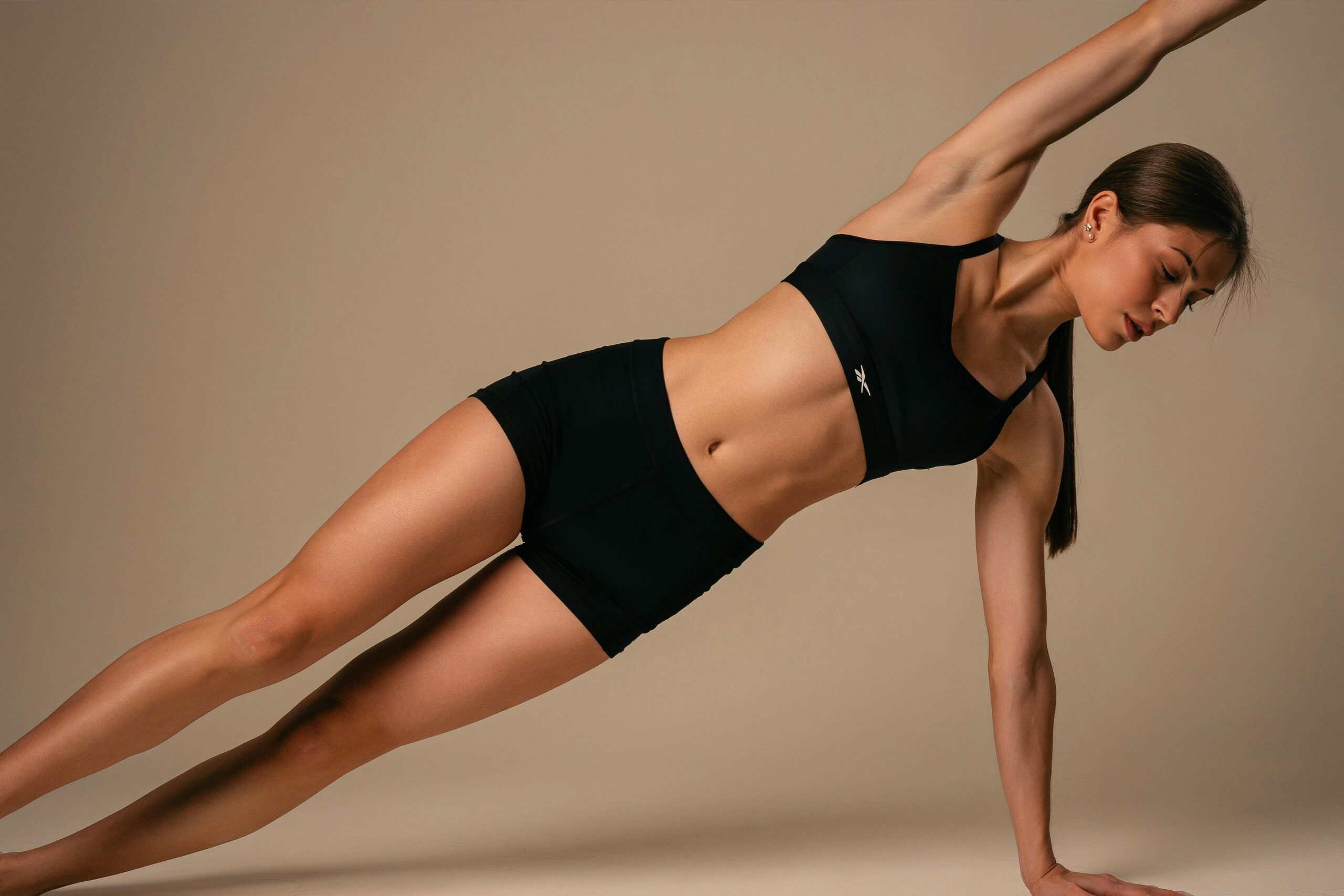
These horizontal pressing patterns often reveal rib flare dramatically. In a poor plank, you’ll see a sway-back position with ribs drooping toward the floor and lower back arched.
Key cues: Set up your plank, then think about “hollowing” slightly—drawing your lower ribs up toward your spine while maintaining a neutral neck and head position. Your body should form a straight line from head to heels, but internally, you’re creating gentle tension by zipping up that imaginary zipper we discussed earlier.
For push-ups, maintain this tension throughout the movement. Exhale as you push up, using the breath to reinforce rib position.
Squats and Deadlifts
These fundamental movements require tremendous core stability. Rib flare during these lifts often accompanies lower back hyperextension, creating dangerous spinal loading patterns.
Key cues: After you’ve braced and before you descend into your squat, check your rib position. You should feel stacked and solid, not arched back. During the lift, imagine you’re trying to shorten the distance between your ribs and hips—this prevents extension and maintains neutral spine.
For deadlifts, the same principle applies at lockout. Many lifters complete the movement by leaning back and flaring their ribs. Instead, finish by driving your hips forward while keeping your ribs stacked over your pelvis.
Loaded Carries
Farmer’s carries, overhead carries, and suitcase carries are exceptional for training anti-rib flare stability because they create real-world asymmetrical or overhead loading demands.
Key cues: Before you start walking, establish perfect posture—ribs down, shoulders back, core engaged. As you walk, the weight will try to pull you out of position. Resist by maintaining that zipper-up feeling and breathing behind your stabilized core (don’t hold your breath, but breathe without losing position).
🏋️ Building a Rib Flare Correction Warm-Up Routine
Correcting rib flare isn’t just about cueing during exercises—it requires dedicated mobility and activation work. Here’s a comprehensive warm-up sequence you can use before strength training:
- 90/90 Hip Flexor Breathing (2 minutes): Lie on your back with hips and knees at 90 degrees, feet on a wall or elevated surface. Focus on feeling your entire back contact the floor as you take deep belly breaths. This resets your diaphragm position.
- Dead Bugs (3 sets of 8 reps): From the same position, slowly extend opposite arm and leg while maintaining back contact with the floor. This challenges your ability to maintain rib position against resistance.
- Quadruped Breathing (2 minutes): On hands and knees, round your upper back slightly and breathe into your back and sides. This activates your deep core stabilizers and teaches proper breathing mechanics.
- Wall Slides (2 sets of 10 reps): Standing against a wall, slide your arms overhead while keeping your ribs down and lower back relatively flat against the wall. This improves overhead mobility while maintaining good core position.
- Pallof Press Hold (3 sets of 20-30 seconds each side): This anti-rotation exercise forces you to maintain rib position against a pulling force, building the exact stability you need for heavy lifting.
⚡ Common Mistakes and Troubleshooting
Even with good cues, lifters often make predictable mistakes when trying to fix rib flare. Here’s how to avoid them:
Overcorrecting Into Excessive Flexion
Some people interpret “ribs down” as “round forward like a scared cat.” This trades one problem for another. Your spine should remain relatively neutral—you’re adjusting rib position, not creating thoracic flexion.
Solution: Think about maintaining proud chest posture while gently drawing your lower ribs toward your pelvis. The movement is subtle, not dramatic.
Holding Your Breath
In an attempt to maintain core stability, many lifters hold their breath excessively, especially during challenging sets. While breath-holding (Valsalva maneuver) has its place in maximal lifting, chronic breath-holding with poor rib position reinforces bad patterns.
Solution: Learn to breathe behind a stable core. Your ribs shouldn’t lift dramatically with each breath during exercise. Practice maintaining rib position while breathing during moderate-intensity work.
Only Focusing on the Front Body
Rib flare correction isn’t just about your abs—it’s about creating balanced 360-degree tension. Your back muscles, particularly your lats and serratus anterior, play crucial roles in maintaining proper rib position.
Solution: Include back-strengthening work, particularly exercises that emphasize lat engagement like rows, pull-downs, and carries. Think about your core as a complete cylinder, not just a six-pack.
🎓 Advanced Considerations for Athletic Performance
For athletes and advanced lifters, rib positioning becomes even more nuanced. Different sports and activities may require slight variations in how you manage your core and ribcage.
Powerlifters, for instance, often use deliberate arch in bench press, which includes some ribcage extension. The key difference is that this is controlled, purposeful positioning for a specific lift, not a habitual postural dysfunction that persists throughout training.
Olympic weightlifters need exceptional overhead mobility combined with core stability. Their rib position during a snatch overhead squat might look slightly different than a strict press, but the underlying principle remains—maintaining a stable, pressurized core cylinder that doesn’t compensate through excessive spinal extension.
Endurance athletes often develop rib flare from breathing pattern dysfunction during long efforts. Incorporating specific respiratory training alongside traditional endurance work can improve both performance and postural health.
🔄 Tracking Your Progress Beyond the Mirror
How do you know if your rib flare correction work is actually working? Beyond visual assessment, here are functional markers to track:
- Improved breathing mechanics: You should notice belly breathing becoming more natural and chest breathing decreasing.
- Reduced lower back discomfort: Many people experience immediate reduction in lower back tension as rib position improves.
- Better lift performance: With proper core stability, most people see improvements in pressing strength and squat/deadlift numbers.
- Decreased neck and shoulder tension: As you stop compensatory breathing, chronically tight upper traps and neck muscles often relax.
- Enhanced endurance: Efficient breathing mechanics improve oxygen delivery and reduce wasted energy.
🌟 Making It Stick: Integration Into Daily Life
Fixing rib flare isn’t just about what you do in the gym—your postural habits throughout the day matter enormously. If you spend eight hours sitting with poor posture, flared ribs, and shallow breathing, your one-hour training session can’t fully counteract that.
Set hourly reminders on your phone to check in with your posture. Are your ribs stacked over your pelvis? Are you breathing into your belly or your chest? These micro-corrections throughout the day reinforce the patterns you’re building during training.
Consider your sleeping position as well. Sleeping on your stomach often encourages rib flare and spinal extension. Side sleeping with proper pillow support or back sleeping with a pillow under your knees can help maintain better alignment even during rest.
Your car seat setup, standing desk height, and even how you hold your phone all contribute to your habitual postures. Making these environments more posture-friendly supports your corrective work rather than fighting against it.
💡 The Mind-Muscle Connection for Core Control
Ultimately, mastering rib position is about developing exceptional body awareness and control. This isn’t something that happens overnight—it’s a skill that improves with consistent, mindful practice.
Start each training session with a brief body scan. Notice where you’re holding tension, how you’re breathing, and where your ribs are positioned. This self-awareness allows you to make corrections before they become movement compensations under load.
Film yourself regularly performing key exercises from the side angle. What looks and feels like good position to you might look quite different on video. This visual feedback is invaluable for calibrating your internal sense of alignment with actual positioning.
Remember that perfection isn’t the goal—improvement is. Some degree of positional variation is normal and healthy. You’re not trying to maintain rigid, military posture at all times. Instead, you’re expanding your movement options and eliminating compensatory patterns that limit performance and increase injury risk.
By implementing these cues, exercises, and strategies consistently, you’ll develop the core control and postural awareness that separates good lifters from great ones. Your strength numbers will improve, your movement quality will enhance, and you’ll build a more resilient, capable body that performs well for decades to come. The journey to mastering your core starts with understanding your ribs—and now you have the complete toolkit to make that happen.