
Proper spinal alignment is the foundation of every effective workout. Whether you’re lifting weights, performing bodyweight exercises, or engaging in functional training, mastering the neutral spine position can transform your fitness results while protecting your body from injury.

The concept of “stacking cues” refers to the systematic approach of aligning your body segments—head, ribcage, pelvis, and limbs—to create optimal posture during exercise. This alignment isn’t just about looking good; it’s about creating a biomechanically sound position that allows your muscles to fire correctly, your joints to move efficiently, and your entire system to work as an integrated unit.
🎯 Understanding the Neutral Spine: Your Body’s Natural Architecture
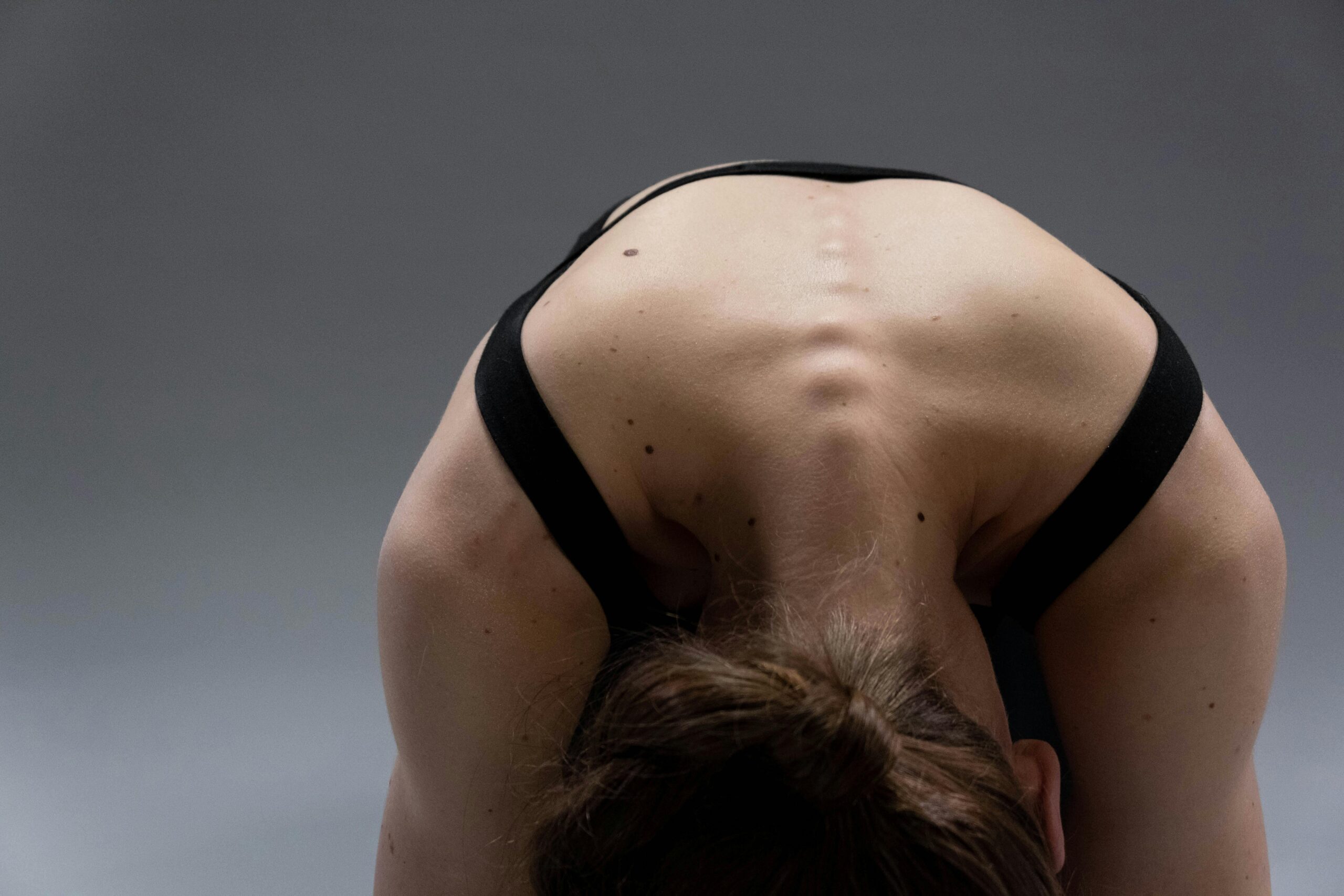
Your spine isn’t meant to be completely straight despite what many believe. A neutral spine maintains three natural curves: the cervical curve in your neck, the thoracic curve in your mid-back, and the lumbar curve in your lower back. These curves act as shock absorbers, distributing forces evenly throughout your body during movement.
When we talk about achieving a neutral spine, we’re referring to maintaining these natural curves without excessive flexion, extension, or rotation. This position allows your deep stabilizing muscles—particularly your transverse abdominis, multifidus, and pelvic floor—to engage properly and support your movements.
Many fitness enthusiasts make the mistake of either over-arching their lower back (excessive lordosis) or rounding their spine (excessive kyphosis) during exercises. Both extremes place unnecessary stress on spinal discs, ligaments, and surrounding muscles, increasing injury risk and decreasing performance efficiency.
The Foundation: Stacking Your Pelvis Correctly 🏗️
Your pelvis serves as the cornerstone of spinal alignment. Think of it as a bowl filled with water—you want to keep that bowl level, not spilling forward or backward. When your pelvis tilts excessively forward (anterior pelvic tilt), your lower back arches too much. When it tilts backward (posterior pelvic tilt), you lose the natural lumbar curve.
To find your neutral pelvis position, stand with your feet hip-width apart. Place one hand on your pubic bone and the other on your lower abdomen. Gently rock your pelvis forward and backward, then settle into a middle position where both hands are roughly on the same vertical plane. This is your neutral pelvis.
During exercises like squats, deadlifts, or planks, maintaining this pelvic position becomes crucial. The moment your pelvis loses its neutral alignment, your spine follows suit, potentially compromising the entire movement pattern.
Common Pelvic Positioning Mistakes
- Allowing the pelvis to tuck under during the bottom of a squat
- Letting the hips shoot up too quickly in deadlifts, causing lumbar flexion
- Sagging hips in plank positions, creating excessive lumbar extension
- Hyperextending the lower back during overhead presses
- Losing pelvic control during single-leg movements
Rib Cage Positioning: The Missing Link in Core Stability 💪
Your rib cage position directly affects your ability to engage your core muscles effectively. When your ribs flare forward and upward, you disconnect from your abdominal muscles and place excessive stress on your lower back. This “rib flare” is one of the most common postural faults in fitness training.
To stack your ribs properly, imagine your rib cage sitting directly over your pelvis like stacked building blocks. Your lower ribs should angle slightly downward, not flare outward. This position allows your diaphragm and pelvic floor to work in harmony, creating optimal intra-abdominal pressure for stability.
A simple cue to practice rib positioning: exhale fully and feel how your ribs naturally settle downward. That lowered position, maintained while breathing normally, is where you want your ribs during exercise. This doesn’t mean constantly holding your breath or restricting breathing—it means maintaining the anatomical position while breathing functionally.
Head and Neck Alignment: The Top of the Stack 🧠
Many people neglect head position during workouts, yet it significantly impacts overall spinal alignment. Your head weighs approximately 10-12 pounds, and for every inch it moves forward from neutral, the effective weight on your spine increases dramatically.
Proper head stacking means your ears should align roughly over your shoulders, which align over your hips and ankles. During exercises, avoid jutting your chin forward, hyperextending your neck to look up, or dropping your head down excessively.
In movements like push-ups, rows, or overhead presses, maintain a “packed neck” position by creating a slight double-chin and keeping your gaze neutral. This engages the deep neck flexors and maintains cervical spine integrity throughout the movement.
Breathing Mechanics: The Secret Ingredient to Spinal Stability 🌬️
Proper breathing isn’t just about getting oxygen to your muscles—it’s a fundamental component of maintaining neutral spine position. The 360-degree breathing technique, where you expand your entire torso circumferentially rather than just lifting your chest, creates optimal intra-abdominal pressure.
This breathing pattern involves inhaling through your nose, allowing your belly, sides, and lower back to expand simultaneously. As you exhale, your core naturally engages, stabilizing your spine for the work ahead. This breathing strategy should coordinate with your movement patterns for maximum effectiveness.
During heavy lifts or challenging exercises, the Valsalva maneuver—taking a breath and holding it briefly while bracing your core—can provide additional spinal support. However, this technique should be used strategically and with proper instruction, as it temporarily increases blood pressure.
⚡ Practical Stacking Cues for Common Exercises
Squats: Building from the Ground Up
The squat is perhaps the best exercise to practice spinal stacking because it challenges your ability to maintain alignment through a full range of motion. Start by setting your foot position—typically shoulder-width with toes slightly out. Before descending, take a breath and brace your core.
As you lower, think about sitting between your legs rather than back. This helps maintain vertical shin angles and keeps your pelvis neutral. Your chest should remain proud without excessive rib flare, and your gaze should be neutral or slightly downward. At the bottom, your spine should maintain the same curves it had at the top—no tucking, no excessive arching.
Deadlifts: Hip Hinge Perfection
The deadlift requires impeccable spinal positioning due to the external load and leverage forces involved. Begin by positioning the bar over mid-foot. As you hinge to grip the bar, push your hips back while maintaining a neutral spine—imagine a stick running from your head to your tailbone.
Before lifting, take a deep breath, pack your lats by pulling the bar toward your shins, and create tension throughout your posterior chain. Your shoulders should be slightly ahead of the bar, not directly over it. As you lift, think about pushing the floor away rather than pulling the weight up—this cue helps maintain proper alignment throughout the movement.
Planks: Static Stability Mastery
Planks seem simple but are frequently performed with poor alignment. Set up on your forearms and toes with your body in a straight line. Common mistakes include sagging hips (lumbar extension), piked hips (lumbar flexion), or flared ribs.
The correct plank position involves a neutral pelvis, ribs drawn down toward your pelvis, and core engaged as if bracing for a punch. Your head should align with your spine—avoid looking forward or dropping your head. Squeeze your glutes slightly to maintain pelvic position, but don’t overtuck your tailbone.
Assessment Tools: Checking Your Alignment 📊
Understanding proper alignment theoretically is different from executing it practically. Several assessment methods can help you determine if you’re maintaining a neutral spine during exercise.
| Assessment Method | What It Reveals | How to Use It |
|---|---|---|
| Wall Stand Test | Static neutral spine position | Stand against wall with head, shoulders, and hips touching; check if you can slide one hand behind lower back |
| Broomstick Test | Spinal alignment during movement | Hold broomstick along spine during squats or hinges; it should maintain three points of contact |
| Video Analysis | Movement patterns and compensations | Record exercises from side view to identify rib flare, pelvic tilt, or spinal flexion |
| Palpation Feedback | Muscle engagement patterns | Have a trainer feel for proper muscle activation during movements |
🎓 Progressive Training: Building Spinal Awareness
Mastering neutral spine positioning isn’t an overnight achievement—it requires progressive practice and body awareness development. Start with static positions before progressing to dynamic movements, and always prioritize quality over quantity.
Begin with simple exercises like dead bugs, bird dogs, and glute bridges that challenge your ability to maintain alignment while moving your limbs. These foundational movements teach your nervous system to stabilize your spine while creating movement elsewhere—a crucial skill for complex exercises.
As your awareness improves, progress to loaded movements with lighter weights, focusing entirely on maintaining proper stacking cues. Only increase load when you can consistently execute movements with perfect alignment. Remember: poor form practiced repeatedly becomes poor form ingrained permanently.
Corrective Exercise Strategies
If you consistently struggle with neutral spine positioning, specific corrective exercises can address underlying limitations. Tight hip flexors often contribute to anterior pelvic tilt, while weak glutes fail to maintain proper pelvic positioning. Limited thoracic mobility can cause compensatory lumbar movement.
Incorporate daily mobility work targeting your hips, thoracic spine, and ankles. Strengthen weak links through targeted exercises: glute bridges for hip extension, dead bugs for anterior core control, and thoracic rotations for upper back mobility. Consistency in these corrective strategies will pay dividends in your main training sessions.
The Mental Game: Developing Proprioceptive Awareness 🧘
Physical cues are only half the equation—developing mental awareness of your body position in space (proprioception) is equally important. This awareness allows you to self-correct during exercises without external feedback.
Practice mindful movement sessions where you perform exercises slowly, checking in with each body segment. Ask yourself: Where is my pelvis? Are my ribs stacked? Is my neck neutral? This deliberate practice builds neural pathways that eventually make proper alignment automatic.
Visualization techniques can enhance proprioceptive development. Before performing an exercise, mentally rehearse the movement with perfect form. Imagine the sensation of proper alignment, the muscles that should engage, and the positions you should feel. This mental rehearsal primes your nervous system for successful execution.
Common Roadblocks and How to Overcome Them 🚧
Many individuals face specific challenges when learning to maintain neutral spine positioning. Identifying these roadblocks is the first step toward overcoming them.
Structural limitations like significant scoliosis or previous injuries may prevent “textbook” neutral positioning. In these cases, work with a physical therapist or qualified trainer to find your individual neutral position—the alignment that minimizes stress while maximizing function for your unique structure.
Muscle imbalances commonly interfere with proper stacking. Tight muscles pull your skeleton out of alignment, while weak muscles fail to hold it there. Address these imbalances through a balanced program of stretching, strengthening, and motor control training.
Habitual movement patterns developed over years don’t change instantly. Be patient with yourself as you retrain movement strategies. Celebrate small victories—maintaining neutral spine for five seconds longer than last week represents genuine progress.
💡 Integration into Your Training Program
Understanding stacking cues means nothing without practical application. Every training session should begin with a brief alignment check and mobility prep that reinforces proper positioning.
Structure your warm-up to include specific drills that groove neutral spine patterns: cat-cow exercises to explore spinal range, quadruped positions to practice stacking without load, and breathing drills to connect respiration with core stability. These preparatory exercises prime your nervous system for the work ahead.
During your main training session, periodically reset your alignment between sets. Don’t just rest passively—use rest periods to reassess your positioning, perform corrective stretches for muscles that tend to tighten, and mentally rehearse the next set with perfect form.
Consider dedicating one session per week specifically to movement quality. Use lighter loads or bodyweight only, focusing entirely on executing movements with impeccable alignment. This deliberate practice session reinforces proper patterns without the fatigue that often leads to compensatory movement.
Long-Term Benefits: Why the Effort Matters ✨
The time investment in mastering neutral spine positioning yields substantial returns. Proper alignment dramatically reduces injury risk by distributing forces evenly across your musculoskeletal system rather than concentrating stress at vulnerable points.
Movement efficiency improves when your body works as an integrated system. You’ll generate more force, lift heavier weights, and perform more repetitions when your muscles fire in proper sequence from a stable foundation. This efficiency translates to better results from your training time.
Beyond the gym, improved postural awareness carries into daily life. You’ll sit with better posture, lift objects more safely, and experience less chronic pain from everyday activities. The body awareness developed through stacking practice enhances overall movement quality in all contexts.
Perhaps most importantly, training with proper alignment is sustainable long-term. Rather than beating up your joints and spine with poor form until injury forces you to stop, you build resilience that allows lifelong training. The strongest, healthiest lifters aren’t necessarily those who train hardest—they’re those who train smartest.
Your Action Plan: Starting Today 🚀
Knowledge without action remains theoretical. Commit to implementing stacking cues immediately by following this progressive plan.
This week, focus exclusively on awareness. Perform your regular workouts but pause frequently to check your alignment. Don’t worry about performance metrics—simply notice where your body is in space and how it feels when properly stacked versus misaligned.
Next week, choose two exercises to perfect. Select movements where you commonly lose neutral positioning and dedicate extra time to mastering alignment in those specific patterns. Video yourself, use the broomstick test, or work with a knowledgeable trainer to get feedback.
In the following weeks, gradually expand your focus to additional exercises while maintaining the quality improvements made on your initial two movements. This progressive approach prevents overwhelm and builds lasting change rather than temporary fixes.
Remember that mastering the art of stacking cues is a journey, not a destination. Even elite athletes and experienced trainers continuously refine their movement patterns. Embrace the process of lifelong learning and improvement, celebrating progress while remaining humble about how much more there is to discover. Your body will thank you with years of safe, effective training and the physical resilience to pursue your fitness goals indefinitely.